


Produktbewertung: 3000 km mit dem Shoei Neotec 3
- 2025-10-10
- Produkt-Tests
Nach mehr als 3000 Kilometern, die wir mit dem Neotec 3 auf unseren Köpfen verbracht haben, und das unter allen möglichen Bedingungen,... Mehr lesen
 by Cruizador
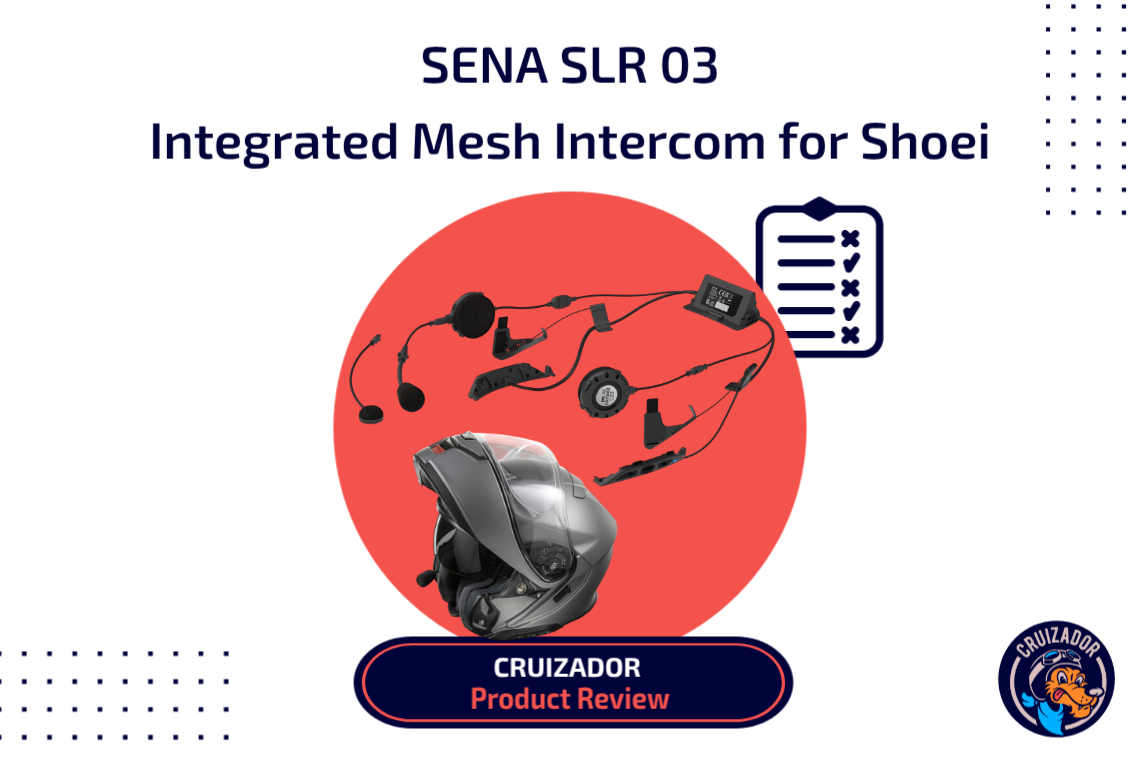
Wenn du viel Geld für einen High-End-Helm wie den Shoei Neotec 3 ausgibst, möchtest du seine schlanken Linien doch nicht mit einer klobigen Gegensprechanlage ruinieren, die wie ein Fremdkörper wirkt, oder? Mehr erfahrest du in unserem ausführlichen Testbericht zum Sena SRL-03 Intercom für Shoei. Hier kommt einer der Marktführer im Bereich drahtloser Kommunikationssysteme ins Spiel: das kalifornische Unternehmen Sena.
Der Shoei Neotec 3 und das Sena SRL-03 Mesh sind wie zwei lang verlorene Liebende aufeinander abgestimmt. Sie sind elegant, perfekt integriert und vor allem von aussen unsichtbar.
Aber bietet diese diskrete Installation wirklich den kristallklaren Klang, die Akkulaufzeit und die Mesh-Magie, die Motorradfahrer suchen? Oder handelt es sich nur um ein teures Accessoire mit ausgeklügeltem Marketing? Beginnen wir mit unserem ausführlichen Testbericht, der mehr als 2.000 km umfasst. Produktbewertung Sena SRL03 Shoei
Kurz zusammengefasst für unsere beschäftigten Leser:innen
|
Pros |
Cons |
|
|
Produktbewertung Sena SRL03 Shoei
Ab jetzt auf English oder Französich (hier)
In a previous test, we put the Shoei Neotech 3 through its paces (here). And even though it’s less stylish than other helmets, particularly those from the same manufacturer, we couldn’t praise its qualities enough, especially its versatility, which makes it ideal for both commuters and those who like to go on longer trips. 
Produktbewertung Sena SRL03 Shoei
We ended that test by mentioning that Japan’s Shoei had teamed up with California-based Sena to offer a MESH intercom system that integrates seamlessly with helmets. But, as you’re starting to get to know us at Cruizador, we didn’t have time to test it in all kinds of configurations. So, after covering nearly 2,000 km in the city, on the highway, and on secondary roads, making calls and listening to music to take our minds off things, we are now in a position to give you detailed feedback from the field. Ready? Then let’s get started.
As indicated on the manufacturer’s website. And remember, the SRL3, SRL for Shoei Rider Link, is only compatible with the Shoei Neotec 3, GT-Air 3, and J-Cruise 3 models.
Intercom
Bluetooth 5.0
Intercom range
Group Intercom
FM Radio
Speaking time
Produktbewertung Sena SRL03 Shoei
To be completely transparent, the author of this test was very reluctant to equip himself with an intercom. In fact, I believed that riding a motorcycle was one of the last places in my life where I was not disturbed by constant intrusions: emails, texts, calls, etc. In short, it was a place where you were forced to be fully in the moment.
I also believed that anything that causes distraction can be dangerous.
That’s why I’m quite a fan of Beeline’s GPS, because it provides minimalist, non-intrusive guidance that doesn’t distract the rider with tons of non-essential information. 
Produktbewertung Sena SRL03 Shoei
The intercom represented everything I was fighting against. But when riding in a group, it can sometimes be useful to exchange a few words, warn of danger, or discuss the route. So I decided to take the plunge and get some gear. Then came the trip back from France. Long, not particularly exciting country roads, increasingly cloudy skies, and a threatening horizon. And then the first raindrops began to fall… Still 3.5 hours to go before I got home…
But when I turned on my “road trip on a bike” playlist and the first notes of Lonely Boy by the Black Keys began to play in my headphones, suddenly everything made sense and the journey became much less tedious.
Isn’t that the advantage of an intercom? Deciding when to turn it on to stave off boredom when it rears its ugly head?
This is the helmet’s greatest strength: its integration.
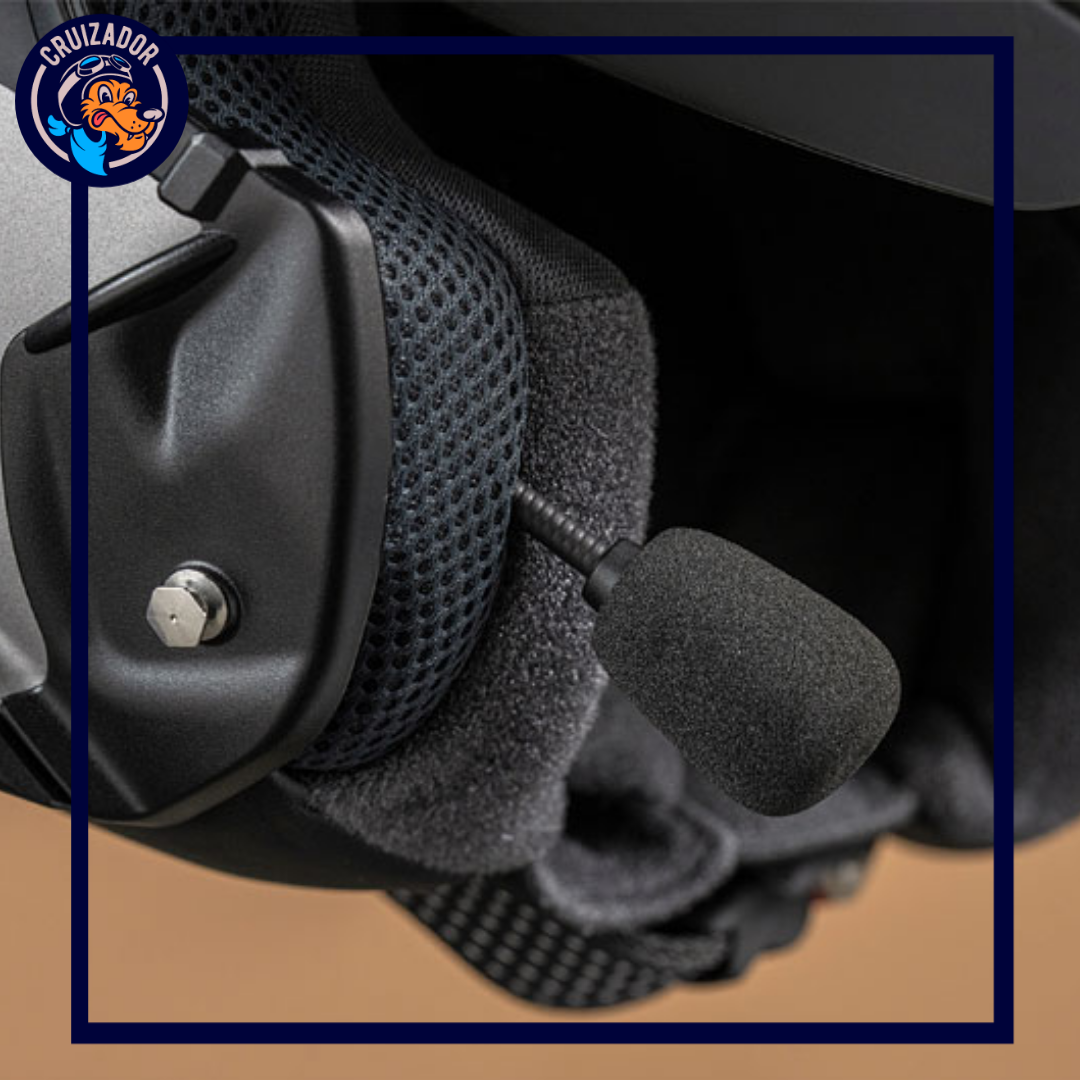
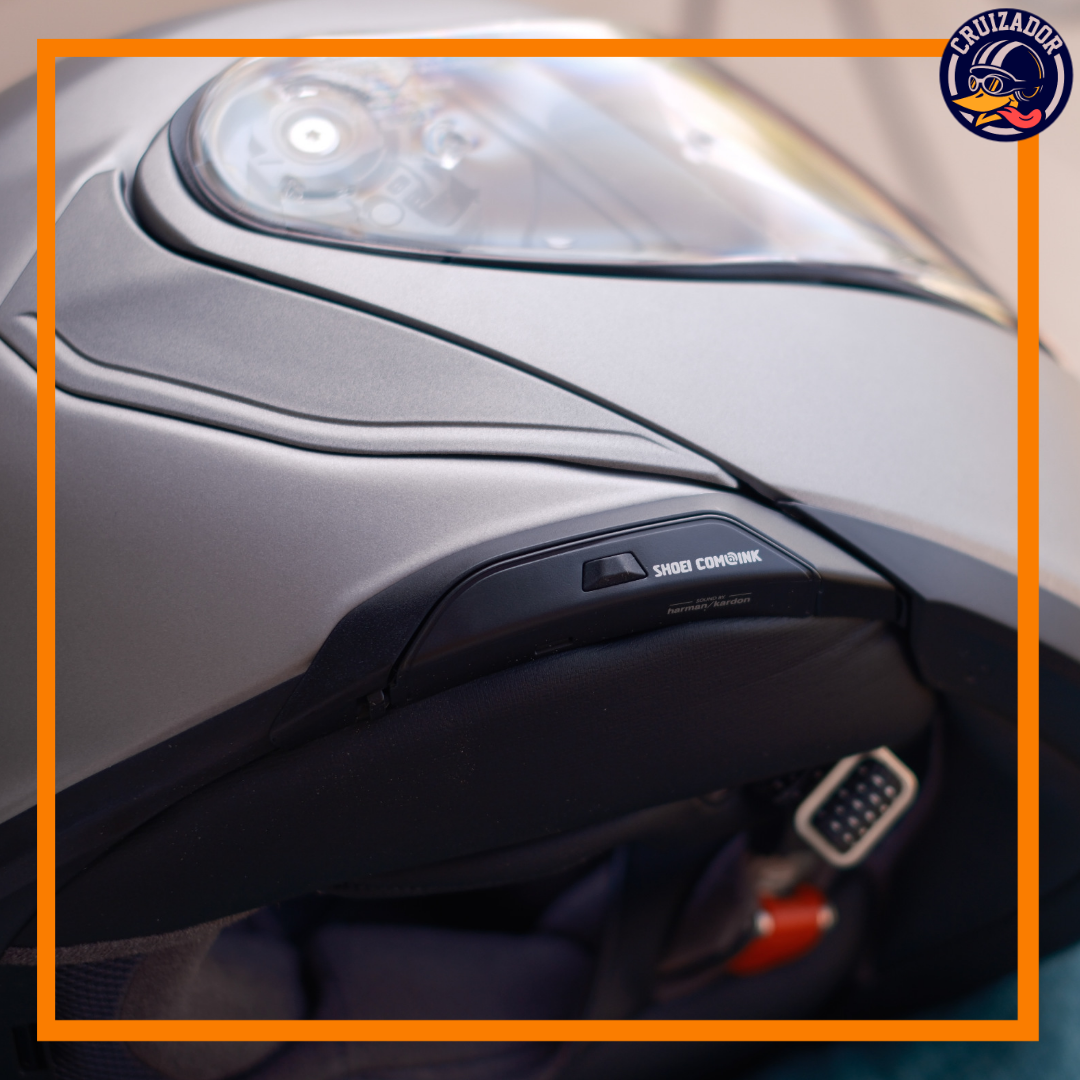
Once installed in the helmet, nothing sticks out, not even a wire.
What’s more, weighing in at just 100g, you don’t even notice it when you’re wearing the helmet.
Installing it in the helmet is relatively easy. All you have to do is unclip the small plastic covers on both sides of the helmet and the battery module at the back.
Then you replace them with the intercom modules. Easy? Yes, except for the left module, since the power cord is blocked by one of the plastic tabs on the helmet. So I had to make a small cut in the tab to let the cord through. And then we put the intercom modules in place. Easy? Yes, except for the left module, because the power cord is blocked by one of the plastic tabs on the headset. So I had to make a small cut in the tab to let the cord through. Is this normal? I would say no. At least according to the few video tutorials I found on YouTube. And it seems hard to believe that the engineers thought of everything except this. But no matter how I turned the helmet, there was no other way to do it. In any case, once installed, and everything is in place, it looks neat and is different from other intercoms, from the same brand or competitors, which are attached to the outside of the helmet and look like a big bump.
With vibrations, it often ends up coming loose. And when you get caught in a heavy downpour, it’s not necessarily good for the electronics either.
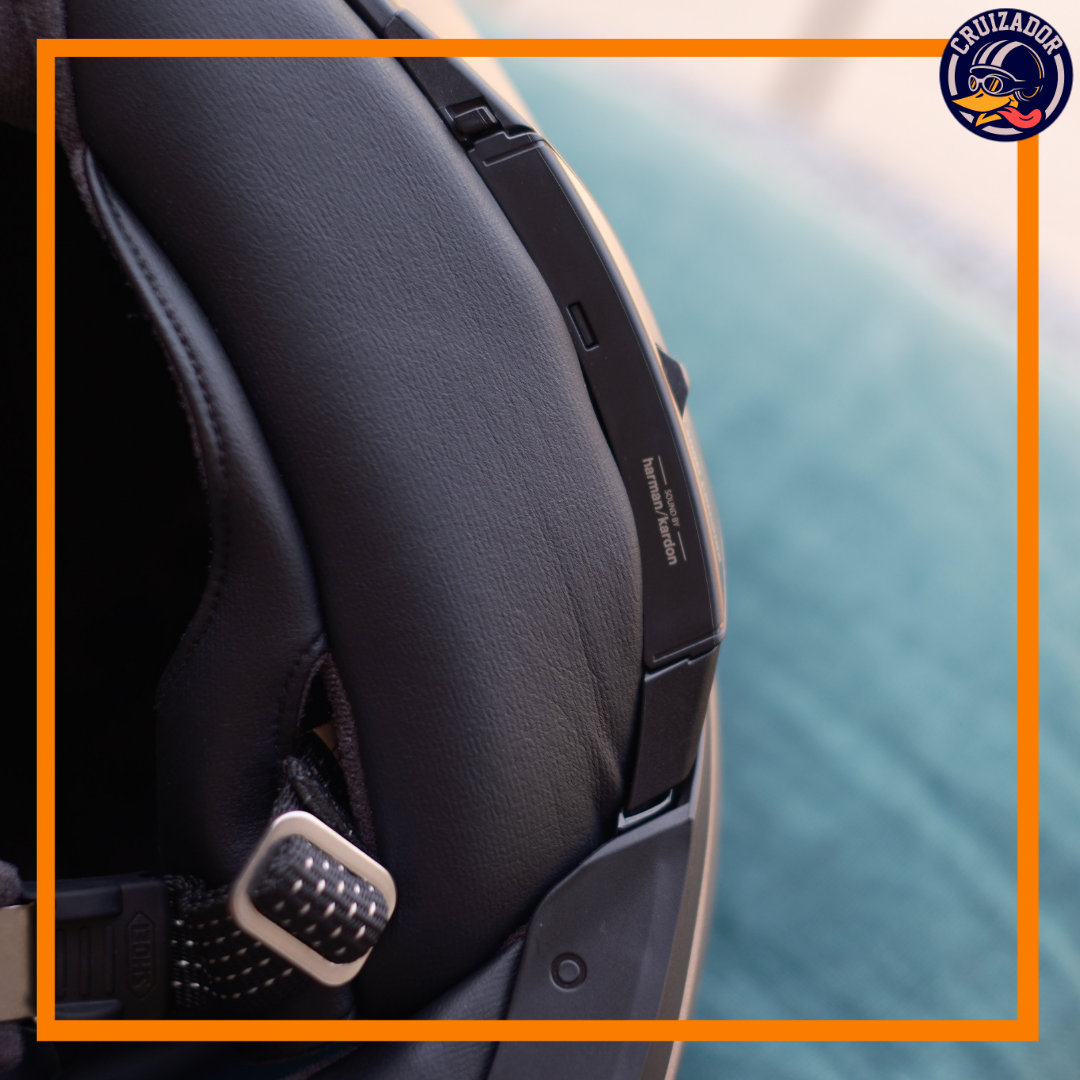
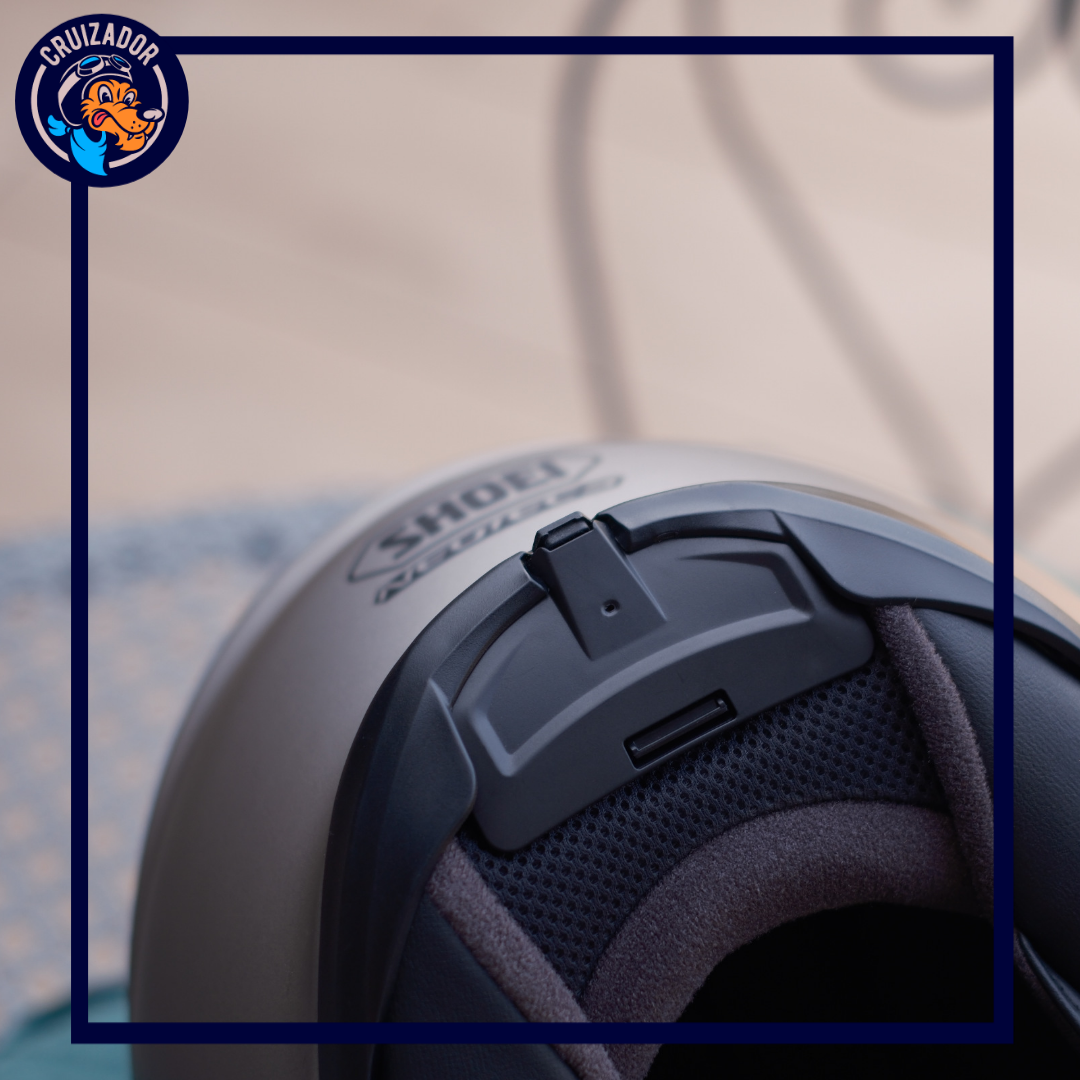
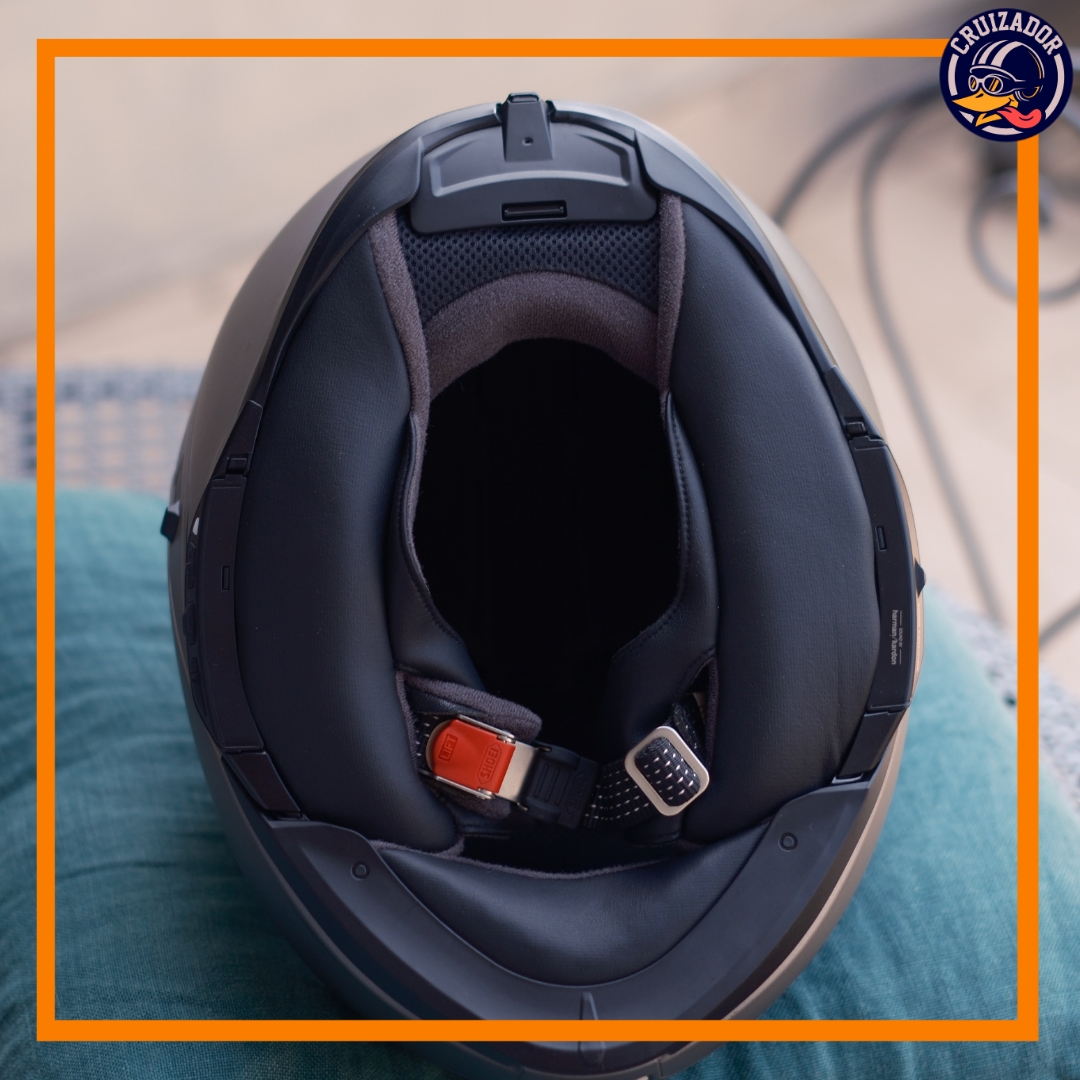
Produktbewertung Sena SRL03 Shoei
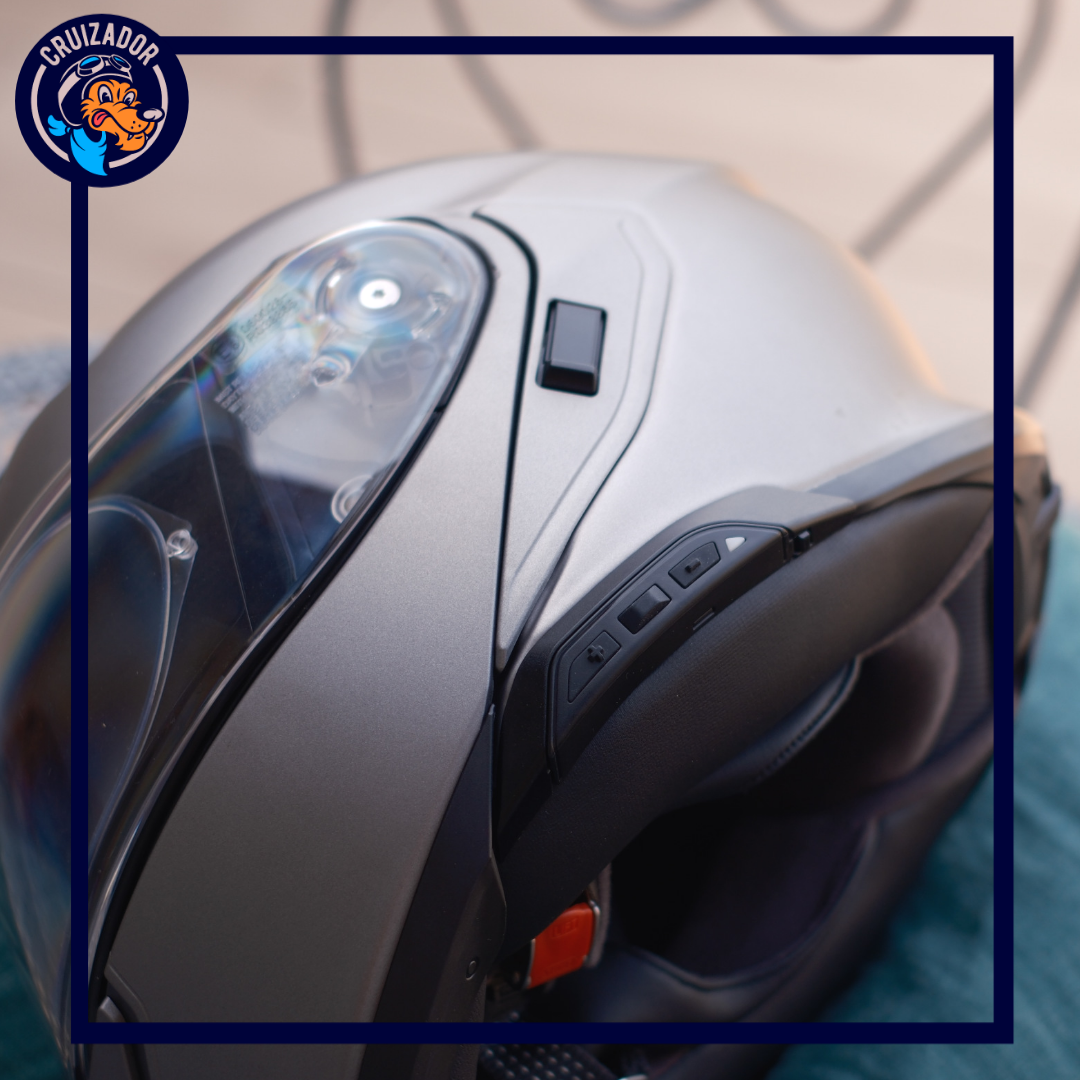
When riding a motorcycle, any distraction is an additional hazard. Therefore, the ability to operate an intercom without taking your eyes off the road is essential. But let’s start at the beginning. Who’s got the gear? The connection to your smartphone is made via Bluetooth. If you’ve ever connected a portable speaker or headphones, you should be fine. Now, to manage the intercom and configure its settings, you’ll need to use the dedicated “SenaMotorcycles” app. This app allows you to fine-tune the settings: ANC, pairing with other Sena intercoms, updates, etc. Now let’s talk about using it on the road.
There are many direct access options. For example, how to turn it on, turn it off, skip to the next track, increase/decrease the volume, etc.
In reality, it takes a little bit of memorization, but it’s relatively intuitive and corresponds to the market standard. For example, to skip to the next song? Press the “volume up” button for 1 second. To go back to the previous song? Press the “volume down” button for 1 second. In short, you get the idea.
Now, the buttons aren’t huge. And it’s true that when you’re on the road, depending on the context/traffic, it’s easy to think you’re pressing the volume + button when you’re actually pressing the volume – button. This causes additional distraction and is not ideal.
But it’s hard to see how the manufacturer could have done it differently, except by putting in 5cm x 5cm buttons, with one function per button. So what about integration into the headphones? Clearly, it’s all about compromise… Produktbewertung Sena SRL03 Shoei
Here, expectations need to be tempered. We are talking about a system integrated into a headset, used in a moving vehicle, with little or no sound protection/isolation. And with engine noise and vibrations, the situation is not improved. However, Harman Kardon, an iconic brand in the audio world renowned for its high-end systems, was responsible for the engineering. But how does it perform in practice?
When it comes to music, up to around 50-60 km/h, it’s more than acceptable.
Admittedly, it’s not on par with high-end headphones, but it’s really good. The bass and treble are decent, and you can hear the instruments clearly across all genres of music (rock, hip hop, electronic, and even podcasts). From 80 to 100 km/h, it’s decent/passable. Above that, it’s unusable. You can hear more or less, but you have to turn the volume up to the maximum.
And when you do that, and you get close to the maximum limit, the sound becomes downright metallic and inaudible.
On the highway? Forget it! But then again, can we reasonably expect an audio system like this to deliver sound quality equivalent to even a mid-range pair of headphones? I doubt it…
We conducted various tests in urban and suburban areas, and even on the highway. Our testers found the quality to be very acceptable, even at high speeds. We recognize the power of algorithms that eliminate background noise, such as wind or engine noise. But for the driver, it’s not quite the same story. The sound quality is sometimes poor, even in the city, and we found ourselves asking our interviewees to repeat themselves several times. This meant we had to focus on the voice rather than the road. And frankly, that’s not ideal.
The range is perfectly adequate. The manufacturer claims a range of 2 km. In reality, we didn’t try to test the limits of the system. But we didn’t experience any sudden interruptions in transmission. As for quality, again, it depends. We did experience some crackling and minor lag between transmission and reception.
It goes without saying that you have to adapt the way you communicate. Be more concise and allow time for a response.
But anyone who has ever used radios or walkie-talkies will know the drill. In any case, it does the job, even if it’s not the same as communicating by phone. But again, keeping in mind that we are a group on the move, with objects or terrain that can interfere with signals, especially in the mountains or in densely populated urban centers, it’s quite conclusive.
First of all, it charges with a USB-C cable. And that’s nice. No more having to take 15 different cables on a road trip. One is enough to charge your smartphone, intercom, and Beeline. Want to charge everything at the same time? A dual-output charger with two cables does the job. The manufacturer claims 2.5 hours of charging for 10 to 12 hours of use. In reality, I haven’t tried to drain the battery to find out the exact time.
But what is certain is that for a day’s use, with 6 to 8 hours on the bike, it lasts.
And worst case scenario, a quick charge during coffee break, and you’re good to go again.
Weighing approximately 100g, the difference compared to the 1750g of the headset itself is imperceptible. Once integrated, apart from the microphone protruding from the front, there is no difference compared to the headset without it. So there is no aesthetic change.
Produktbewertung Sena SRL03 Shoei
If you want seamless integration in your helmet, you won’t have any other choice. If you’re open to other possibilities, you’ll have plenty of options. First, the most economical option is your smartphone wireless earphones (e.g., Airpods). They will do more or less the same job without costing you a penny more.
However, with the pressure points of the helmet, this could become a deal breaker over time.
If you are willing to consider other intercoms, the budget will be the main indicator.
Asian retailers sell versions starting at around $50.
Sena also offers different versions. The Sena 50S or 50R feature the same technology but are “non-integrated” for roughly the same price. So what’s the advantage? Not much, except that they can be transferred from one helmet to another. It should be noted that the manufacturer offers different ranges, with different levels of technology and… different prices. Finally, Cardo, the other major manufacturer, also offers different models, and that with the new standards, compatibility between brands is less and less of an issue.
Yes, if you have the budget. Having an intercom that weighs barely 100 grams and fits perfectly into the helmet is an undeniable advantage.
Now, the big downside is that it’s only compatible with the third version of the Shoei GT-Air/Neotec/J-Cruise. So, if in a few years you upgrade to the new version of these helmets, there’s no guarantee that your Sena will still be compatible and you may have to buy a new one. And for some people, that could be a deal breaker.
Will you necessarily be happier with an intercom? It’s hard to say. If you had asked me this question a few months ago, I would have said no. But after 2,000 km, with (good) music in my ears, I would be tempted to say that it will make certain journeys much more enjoyable. Will you make business calls while riding, and will that count as working time? I doubt it. But as mentioned above, it will probably be a useful tool when riding in a group and you want to rave with your friends about the motorcycle coming towards you, or the gas station attendant 😉 In any case, we hope you find this test useful. Feel free to browse our BLOG to discover other topics related to motorcycles. Ride on! Produktbewertung Sena SRL03 Shoei
And here are a few snapshots of the SRL 3 to conclude this test.
Produktbewertung Sena SRL03 Shoei
Hey, I'm the founder and Chief Biker Officer of Cruizador. I've been a motorcyclist and travel enthusiast for a long time, and it was in 2018 that I decided to launch this new service, hoping that it would speak to as many bikers as possible who share the same philosophy and the same thirst for the great outdoors. I'd be delighted to take note of your comments, ideas for improvement, etc. Ride on!

Nach mehr als 3000 Kilometern, die wir mit dem Neotec 3 auf unseren Köpfen verbracht haben, und das unter allen möglichen Bedingungen,... Mehr lesen

Wenn du Freunde:innen hast, die Motorrad fahren, bist du vielleicht zu einem bestimmten Zeitpunkt im Jahr auf der Suche nach einer originellen... Mehr lesen

TCX Dartwood GTX Motorrad-Sneaker im Test: Stilvoll, wasserdicht und schützend Immer auf der Suche nach Sicherheitsausrüstung für Motorradfahrer:innen, die keine Kompromisse bei... Mehr lesen
